Written by the InclusivePay Merchant Advisory Team | Last updated: August 2026
Square is removing all CBD and hemp-derived products from its platform. Sellers must strip these items from their catalogs by October 15, 2026, online and in person. Square accounts stay open for non-CBD products, and Square Loan balances are unaffected.
Square pointed to the federal hemp redefinition taking effect November 12, 2026 — but October 15 is Square’s own deadline, not the government’s. It does not automatically move if Congress delays the law.
CBD merchants have roughly ten weeks to place a dedicated merchant account before Q4. Topicals are the fastest placements in this market. Ingestibles are assessed case by case.
If you sell CBD through Square, you got an email this week that ends your payment processing. Not pauses it. Ends it.
On August 7, Square began notifying sellers that CBD and hemp-derived products are coming off the platform entirely. Online and in person. The instruction is to strip every CBD, hemp, and hemp-derived item out of your catalog by October 15, 2026. After that date, those items are no longer permitted on Square.
Your account itself stays open. You can keep selling non-CBD products. If you have a Square Loan, the balance and terms do not change, and repayment continues as a percentage of your daily card sales.
But your CBD revenue on Square has an expiration date, and it is roughly ten weeks out.
Here is what that email did not explain, and what most coverage this week is getting wrong.
October 15 is Square’s date, not Washington’s
Square pointed at a federal law change. That part is real. A new federal definition of hemp is scheduled to take effect on November 12, 2026, and it narrows what qualifies as legal hemp dramatically.
So merchants are doing the natural thing. They are watching Congress, reading about delay bills, and assuming that if the law slips, their Square account is fine.
It is not.
Real consequence: October 15 is Square’s internal deadline. It is not written into the statute. If Congress pushes the federal date back, Square’s catalog removal date does not automatically move with it. A merchant who waits for Washington to blink can still lose their catalog in October.
And Congress is genuinely in motion right now, which is exactly what makes this trap so easy to fall into. In the early hours of Saturday, August 8, the Senate passed a continuing resolution by a vote of 90 to 6 that would push the hemp restrictions from November 12 to December 11. An attempt to strip that delay out of the bill failed when senators voted 61 to 32 to table it.
Two things to understand about that vote:
- It is not law yet. The bill still needs House approval, and the House is out on a five-week recess until September.
- It is narrow. The Senate language does not move the November 12 effective date at all. It temporarily limits what the new rules reach for about four weeks. That is a reprieve measured in weeks, not years.
Either way, none of it touches October 15. Square made a business decision, and business decisions do not wait for conference committees.
What the new law actually changes
The provision everyone is reacting to was signed on November 12, 2025, with a one-year delay built in. It does two things that matter to your product line.
First, it swaps the measuring stick. The old standard looked only at delta-9 THC at 0.3% by dry weight. The new standard measures total THC, which folds in THCA and delta-8. A lot of products that tested clean under the old rule do not test clean under the new one.
Second, it adds a hard ceiling on finished products: 0.4 milligrams of total THC per container. For scale, products sitting on shelves today commonly run 2.5 to 10 milligrams per unit.
That second number is the one reshaping the market, and it lands hardest on anything you swallow.
Worth knowing: Whether that per-container cap reaches non-consumable topicals is not settled. The statutory language is being read differently by different attorneys right now. If your product line is topical, this is a question for your counsel, not for a payments blog. What we can speak to is placement, and placement is a very different picture.
Not every CBD product is the same risk
Here is something most guides in this space will never tell you, because most of them are written by people who have never actually submitted a file to an acquiring bank.
Underwriters do not see “CBD” as one category. They see product formats, and the gap between those formats is enormous.
Topicals: the easiest placement in high-risk
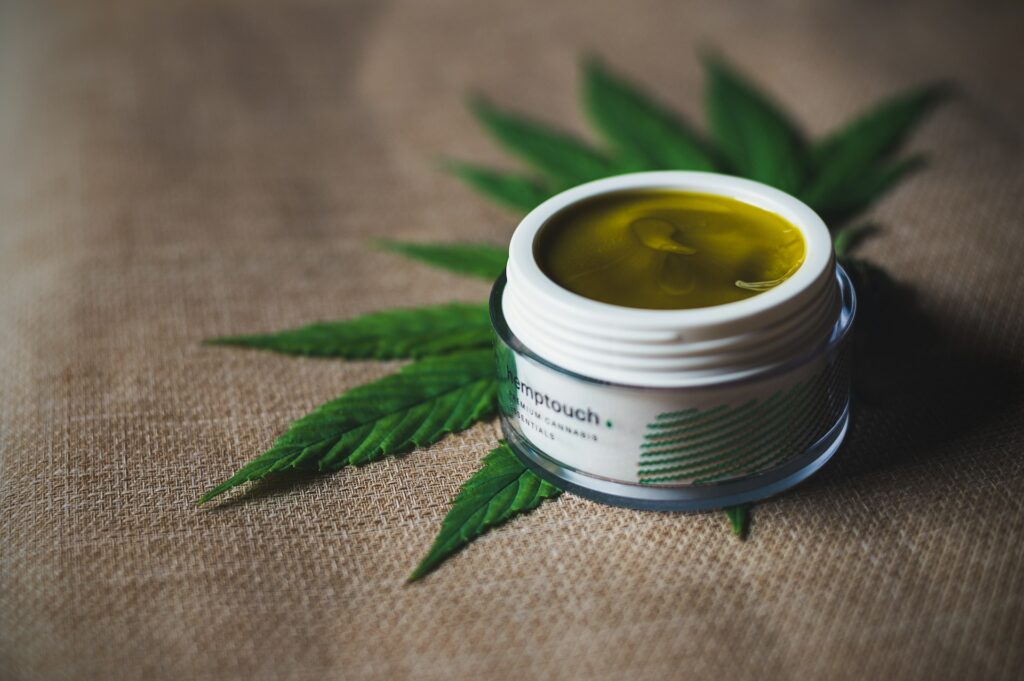
Creams, balms, salves, roll-ons, lotions, patches. If this is your product line, take a breath.
Topicals are the single easiest CBD format to place with a domestic acquiring bank, and it is not close. Nobody is ingesting the product. The health-claim exposure is lower. The regulatory questions that make underwriters nervous about ingestibles mostly do not apply. Banks have years of clean performance data on this format.
The practical effect: topical brands move through underwriting fast, and they land at the low end of high-risk pricing rather than the punitive end.
Real result: We have a topical CBD merchant who has been placed on the same account for nine years, running over $1M a year, with zero interruptions. That is not a survivor story. That is what a correctly underwritten topical account looks like when nobody is treating you like a liability.
Ingestibles: case by case, and honestly so
Tinctures, softgels, capsules, gummies, beverages. This is where it gets real, and we are not going to pretend otherwise.
Ingestibles are placeable. Many of them get placed. But every file is assessed individually, and the answer depends on specifics that a generic pre-approval cannot cover:
- Your total THC per container, measured under the new standard, not the old one
- Whether your COAs are current, third-party, and match what is actually on your site
- What your product pages claim — health claims sink ingestible files faster than anything else
- Your formulation roadmap, because a bank underwrites where you are going, not just where you are
- Chargeback and refund history, which matters more in consumable categories
Some ingestible brands will place in days. Some will need to reformulate first. Some will need to look at alternatives to card rails entirely. The only honest answer is that we have to look at the file.
Flower and high-THC formats
Raw flower, pre-rolls, and anything built around THCA is the hardest end of this market, and the new total-THC standard is aimed squarely at it. If that is your catalog, the conversation is less about payment processing and more about what your business looks like in 2027.
The part where Square went further than the law required
Read Square’s own explanation carefully. A Square spokesperson said the new federal law places new restrictions and requirements on hemp-derived products, including those containing CBD, and that Square is notifying affected sellers and helping them update catalogs where possible.
But notice what the law does and what Square did. The law restricts products by THC content. Square removed the category.
A broad-spectrum or isolate topical with no measurable THC is not the thing the statute is aimed at. It is coming off Square anyway.
Real consequence: Being compliant does not protect you on an aggregator platform. Aggregators manage risk at the category level because that is the only way their model works — you are not underwritten, you are grouped. When the category gets uncomfortable, everyone in the group goes, including the merchants doing everything right.
That is the structural difference between a shared aggregator account and a
dedicated merchant account. With a dedicated account, an acquiring bank underwrites your business, your products, and your COAs. You have a file. You have a relationship. You are not a line item in a category someone decided to exit on a Tuesday. We break this down in more detail in our guide to what a high-risk merchant account actually is.
Square has done this before, and the timing is the tell
This is not the first time Square has removed CBD merchants, and the pattern is worth studying.
In October 2023, Square gave a long-standing CBD retailer 30 days’ notice of termination. That merchant had been on the platform for over four years with a clean record, and the notice landed with a deadline that fell right on Black Friday. They had to replatform their entire payments, POS, and inventory system during the busiest week of the retail year.
Now look at the current date. October 15 sits directly in front of Q4.
Real consequence: If you wait until late September to start looking, you are underwriting, integrating, and testing a new gateway during the exact weeks you should be running holiday promotions. That is how a policy change becomes a revenue event.
Why the next ten weeks get crowded
Here is the part nobody in this industry likes to say out loud, so we will.
When a major processor exits a vertical, every affected merchant starts applying at roughly the same time. Those applications land at the same modest number of acquiring banks that actually write CBD business. Underwriting queues that normally clear in days start clearing in weeks.
It happens every single time. Elavon in 2019. Every processor exit since. The merchants who move in week one get normal timelines. The merchants who move in week eight get whatever is left.
We are saying this plainly, and we are not saying it to rush anyone into a bad decision. Take the time you need to choose the right partner. Just do not spend six weeks deciding whether to start.
What a dedicated merchant account actually changes
InclusivePay is an ISO. We do not hold your funds and we do not process your transactions. What we do is place your business with U.S. domestic acquiring banks that underwrite CBD and hemp merchants, and then stay in the relationship after the approval. If you want the full picture of how this works, start with our CBD payment processing guide.
What changes structurally when you move off an aggregator:
| Aggregator (Square) | Dedicated merchant account | |
|---|---|---|
| Underwriting | Category-level. You are grouped. | Your business, individually underwritten |
| Account stability | Policy change can remove you overnight | Contractual relationship with an acquiring bank |
| Funds risk | Holds and freezes with limited recourse | Reserve terms defined up front, in writing |
| Gateway | Locked to the platform | Authorize.Net or NMI, portable across carts |
| Pricing | Flat, set by the platform | Priced to your risk profile and volume |
| Support | General queue | A named contact who knows your file |
If you are on WooCommerce, the gateway question matters as much as the bank question — we covered the specifics in our WooCommerce CBD payment gateway guide. And if you want to compare providers before you commit to anyone, including us, our breakdown of the best CBD payment processing companies is a reasonable place to start.
What to do this week
- Pull your COAs and check them against the total THC standard. Not delta-9 alone. Total THC, including THCA and delta-8. This is the first thing an underwriter will ask for.
- Separate your catalog by format. Topicals, ingestibles, and anything flower-adjacent are three different underwriting conversations. Know your revenue split before you apply.
- Audit your product pages for health claims. This is the most common reason a clean CBD file gets declined, and it is entirely fixable before you submit.
- Gather three months of processing statements. If you are over $100K in annual volume, pull two years of business tax returns as well.
- Apply now, decide later. Underwriting is not a commitment. Getting your file in the queue in August rather than October is the single highest-leverage thing you can do this month.
- Do not stop processing on Square before you have a live replacement. Your non-CBD sales are unaffected, and abruptly zeroing out your volume creates its own questions.
Topical brands: you are the easy file. Come talk to us and let us get you placed.
Ingestible brands: you are a real conversation, and we would rather have it honestly than sell you a timeline we cannot hit.
Frequently asked questions
Does Square accept CBD payments?
Not after October 15, 2026. Square has instructed sellers to remove all CBD, hemp, and hemp-derived items from their catalogs by that date, online and in person. Square previously ran a dedicated CBD program, which we documented in detail in our guide to Square CBD processing. That program is being wound down.
Is my whole Square account being closed?
No. Square has said accounts remain open and sellers can continue selling non-CBD products as usual. Only CBD and hemp items are affected. If your business is CBD-only, though, the practical result is the same, and you need a dedicated high-risk merchant account to keep taking cards.
What is the downside of using Square for CBD?
You are not underwritten individually. On an aggregator you sit inside a risk category, and when the platform reassesses that category, compliant merchants get removed alongside noncompliant ones. Merchants have also reported abrupt deactivations and extended fund holds with limited escalation paths. Our comparison of CBD payment processing companies walks through how aggregator models differ from dedicated accounts.
Can you use Square at a dispensary?
No. Marijuana and THC dispensary card processing is prohibited across the Visa and Mastercard networks, not just by Square. That restriction is separate from the hemp changes discussed here, and it is not something any processor can work around for card payments. InclusivePay does not place cannabis or THC dispensary card processing.
Are CBD topicals easier to place than gummies or tinctures?
Substantially, yes. Topicals are the most straightforward CBD format to place with a domestic acquiring bank — lower health-claim exposure, no ingestion, and years of clean performance data behind the category. Ingestibles are assessed individually and depend on your total THC per container, your COAs, your on-site claims, and your processing history. Both are worth a conversation; only one of them is close to routine. Our CBD payment processing page covers what underwriting looks at for each.
If Congress delays the hemp law, does Square’s October 15 deadline move?
There is no indication that it does. October 15 is Square’s own catalog deadline, not a statutory one. The Senate passed a continuing resolution on August 8 that would push federal hemp restrictions to December 11, but it still needs House approval and the House does not return until September. Planning around a delay that has not happened, for a deadline that was never tied to the statute, is a bad bet.
How fast can I get a new CBD merchant account?
CBD placements typically move in 24 to 48 hours once a complete file is in, and topicals are the fastest of those. The variable is not usually underwriting speed — it is how long it takes merchants to assemble COAs, statements, and a clean website. It is also worth understanding that processor exits create application surges, and queues at CBD-friendly acquiring banks stretch when everyone applies at once. Start the application process before the rush, not during it.
What happens to my Square Loan if I sell CBD?
Square has said outstanding loan balances and terms are unaffected by this change. If you continue selling non-CBD products on Square, repayment continues automatically as a percentage of your daily card sales, exactly as it does now. If CBD was the bulk of your Square volume, talk to Square directly about what repayment looks like once that revenue moves elsewhere.
Do I need to reformulate my products?
That depends on your format and your lab numbers, and it is a question for your regulatory counsel rather than your payments provider. What we can tell you is what underwriting will ask: your total THC per container under the new standard, current third-party COAs, and product pages that do not make health claims. Bring those three things and the placement conversation gets a lot shorter.
Can I just switch to another aggregator like Stripe or PayPal?
Neither supports CBD in any meaningful way, and moving from one aggregator to another reproduces the exact vulnerability that just cost you your Square catalog. If a platform can remove your category by policy update, your payment infrastructure is borrowed rather than owned. A dedicated merchant account with an acquiring bank is the structural fix.
InclusivePay is a U.S.-based ISO founded in 2018. We place CBD, hemp, peptide, and nutraceutical merchants with domestic acquiring banks. We do not hold funds and we do not process transactions directly.